

A very fine quality pair of George III period best mahogany ‘square back’ chairs, from Attingham Park, Shropshire and probably designed by the architect, James Wyatt.


Tasmanian bluegum Stickley pattern library chair c 1920
A rare Tasmanian bluegum library chair.
Hobart c 1920.
From a pattern by the pioneering American designer, Gustav Stickley.
The back adjustable & extraordinarily comfortable.
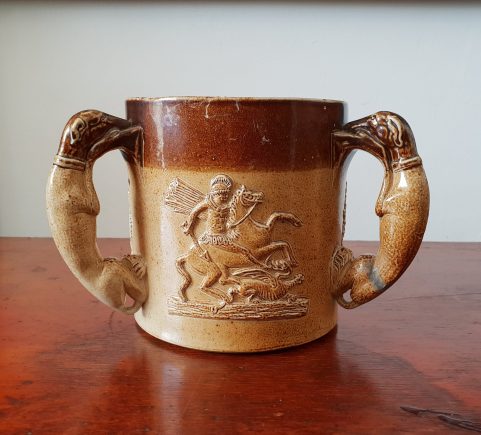

Large Staffordshire hunting mug c1820
A handsome English Regency period large hunting mug, with three hound – form handles, the sides applied with buccolic scenes and a hunter on horseback.
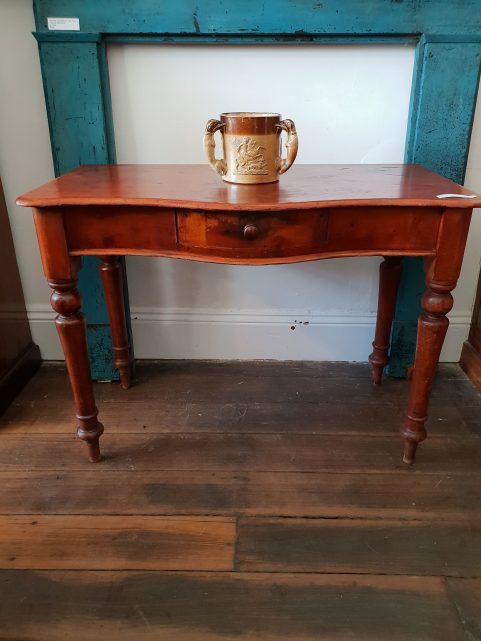

Tasmanian huon pine side table c 1860
A serpentine front Tasmanian Huon pine side table.

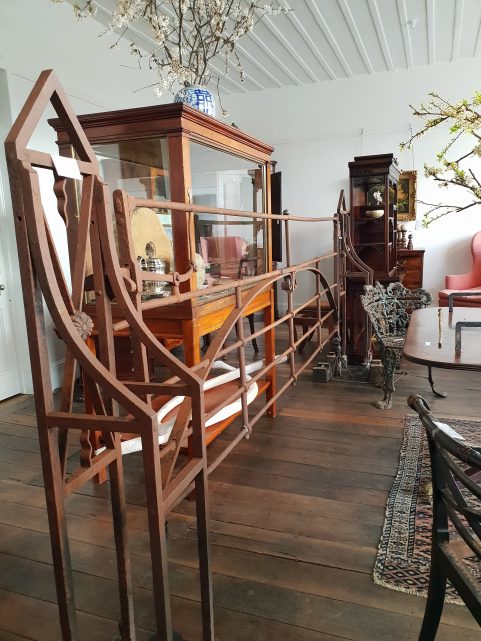

Regency period entrance gate and original posts c 1820
A rare forged iron Regency period entrance gate, with the original Egyptian revival posts.
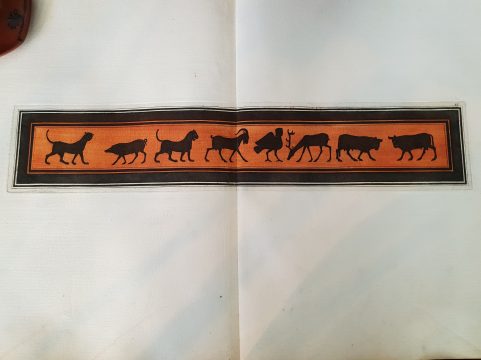

Wild Animals from a Greek vase 1766
an engraving from ‘Collection of Etruscan, Greek and Roman Antiquities from the Cabinet of Sir William Hamilton’. Published in two volumes 1766 and 1767.
Published at an enormous cost of £6,000, in an edition of 500 copies, the work was the first true record of Greek art & terrifically influential on subsequent design & taste.
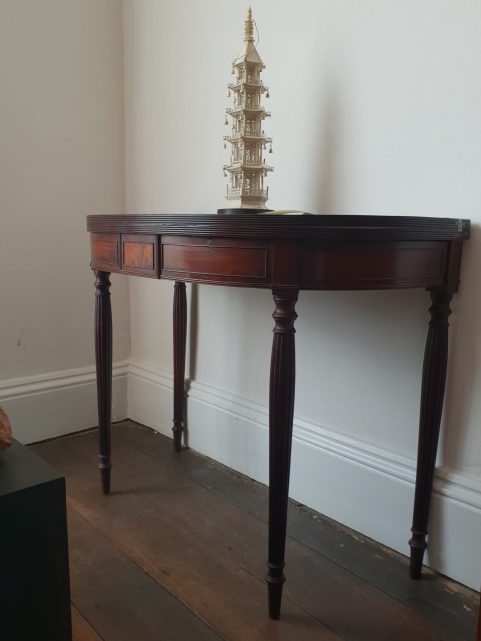

English Regency mahogany tea table c 1810
A fine quality Cuban mahogany tea table with finely reeded edges and legs and double gate action to the rear legs. Original waxed finish. UK origin c 1810.
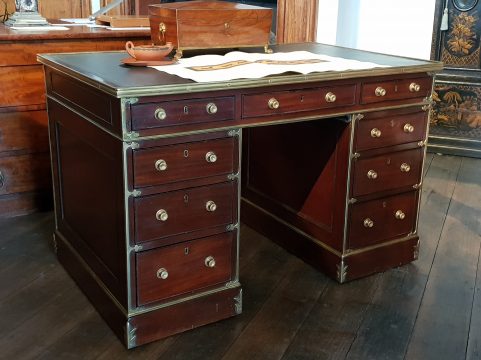

Regency mahogany brass bound campaign partners desk c 1820
 A very rare full mahogany brass bound campaign writing desk, of the finest mahogany, with ebony reeded plinths, double pin locks and massive patent steel revolving casters. The whole of diminutive size. Related is a brass bound campaign reproducing machine Davenport desk with similar mounts and quality, illustrated in Nicholas Brewers ‘ Campaign Furniture- elegance under canvas’.
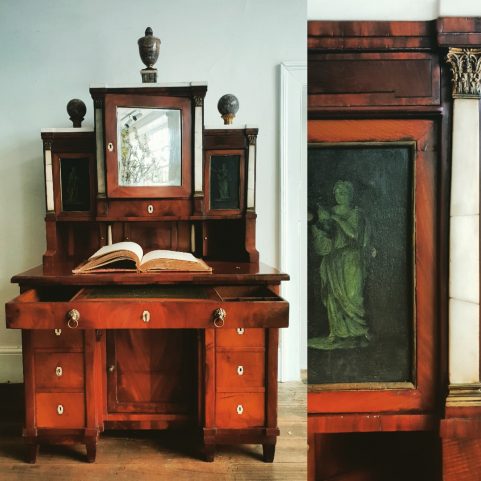

Copenhagen neo-classical ladies writing cabinet c.1810
A rare Baltic states/ Copenhagen ladies writing cabinet c 1810. With grisaille painted panels, ormolu and alabaster mounts and ten secret compartments.
Closely related examples illustrated in Sigurd Wallin’s ,
Nordiska Museets Möbler Frän
Svenska Herremanshem, Vol 3.