

A good quality Anglo Indian teak campaign / two part travelling chest. Fitted with rare semi circular flush drawer handles and cast brass carrying handles.


18th Century Pestle, Mortar and Stand c. 1780 of monumental size
A monumental Pentallic marble four lobed mortar, contained within a full log of elm, the pestle of lignum vitae and elm. The whole nearly 3 metres high. I have never seen an example this complete, or of this size. Wonderfully sculptural and practical, it would suit a large a kitchen or restaurant.
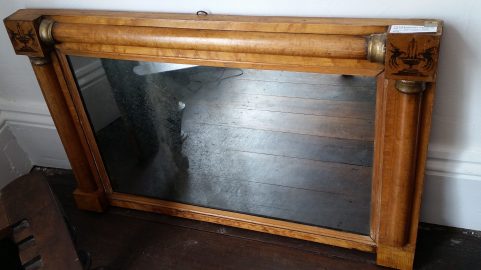

William IV overmantel mirror
A birds eye maple veneered small mantel mirror, the corners with the original paintwork of exotic birds drinking from a fountain. Original gilding and mercury silvered mirror plate.
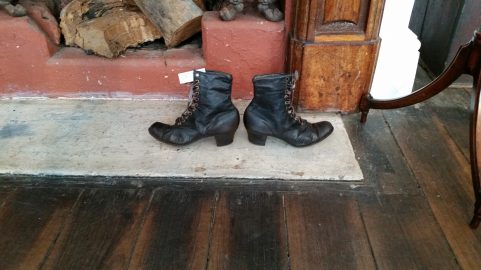

Pair of Victorian Ladies Leather Shoes
A small pair of ladies everyday shoes, with hobnails, silk linings and re-soled many times.
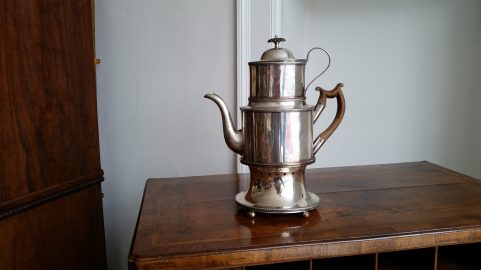

A very rare Old Sheffield plate tea & coffee Biggin c. 1790
A very rare English George III period tea & coffee biggin. The whole of oval form. The top lid to the percolator also fitting the pot. The oval pot is filled with water and heated from the stove below. The stove is complete and has a wick with fuel base. There are lids to stop steam and condensation, as well as the percolator funnel and coffee compressing lids. Working and watertight condition. The first English coffee machine. Frederick Bradbury in his History of Old Sheffield Plate, published in 1912, illustrates an almost identical example.


Tasmanian Colonial period cedar open book shelves
A good set of open shelves in Australian cedar, with nicely turned uprights and original colour and surface polish.
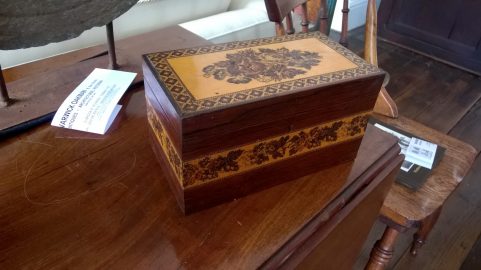

English Tunbridgeware tea caddy c1830
An English tea caddy with fine Tunbridgeware inlay on satinwood, and rosewood, of garlands of roses, to all sides. Nice original condition and divided and lined interior. William IV period c. 1835.
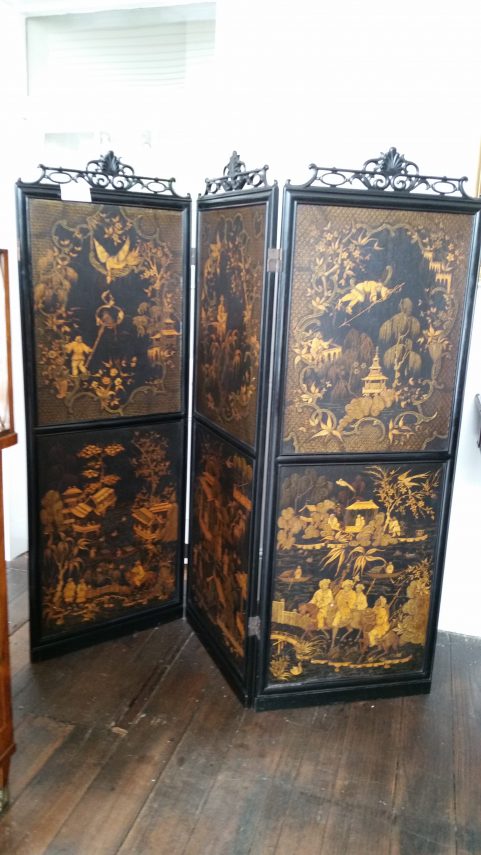

Regency three fold Chinoiserie Screen
A fine and rare English late Regency period gilded and painted beech three fold screen, reasonably by John Crace. The Chinese / Grecian fret to the top and flying Chinamen on branches typical of his work on cabinet fronts, Carlton House and the Brighton Pavillion. Ex Butchoff Antiques, Kensington Church St, London.
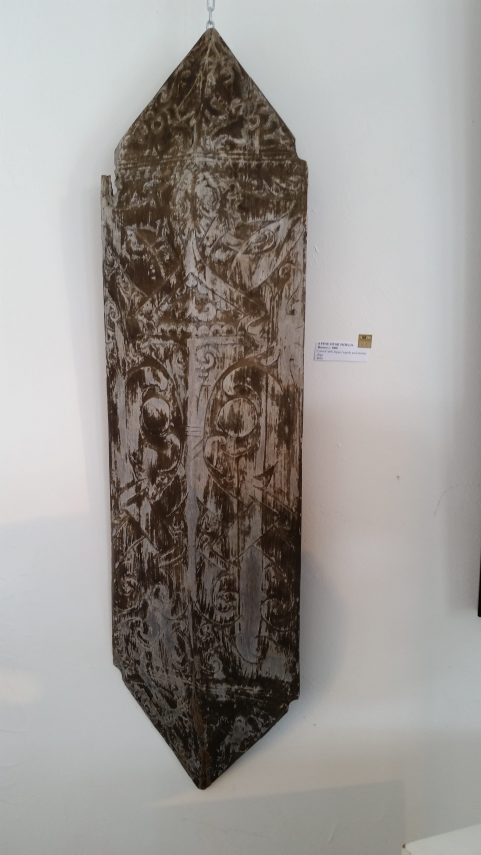

A carved Dyak (Iban) Fighting Shield
A very weathered, but still beautiful, well carved Dyak (Iban) fighting shield, with carved integral handle. Collected before c.1920. The carving emblematic of water buffalo and dogs.
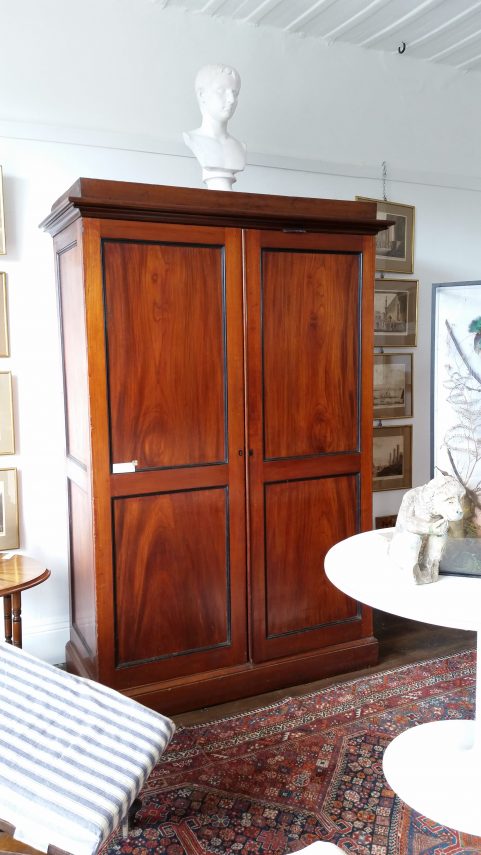

Tasmanian Colonial period clothes Press c.1830
A rare Tasmanian colonial full cedar clothes press. With ebonized mouldings to doors and neo-classical dropped pediment. Original polish and ebony inlaid escutcheons. Fitted with the original trays and drawers Hobart c. 1830